Poetry goes no further than language: Carol Yinghua Lu in conversation with Claire Roberts
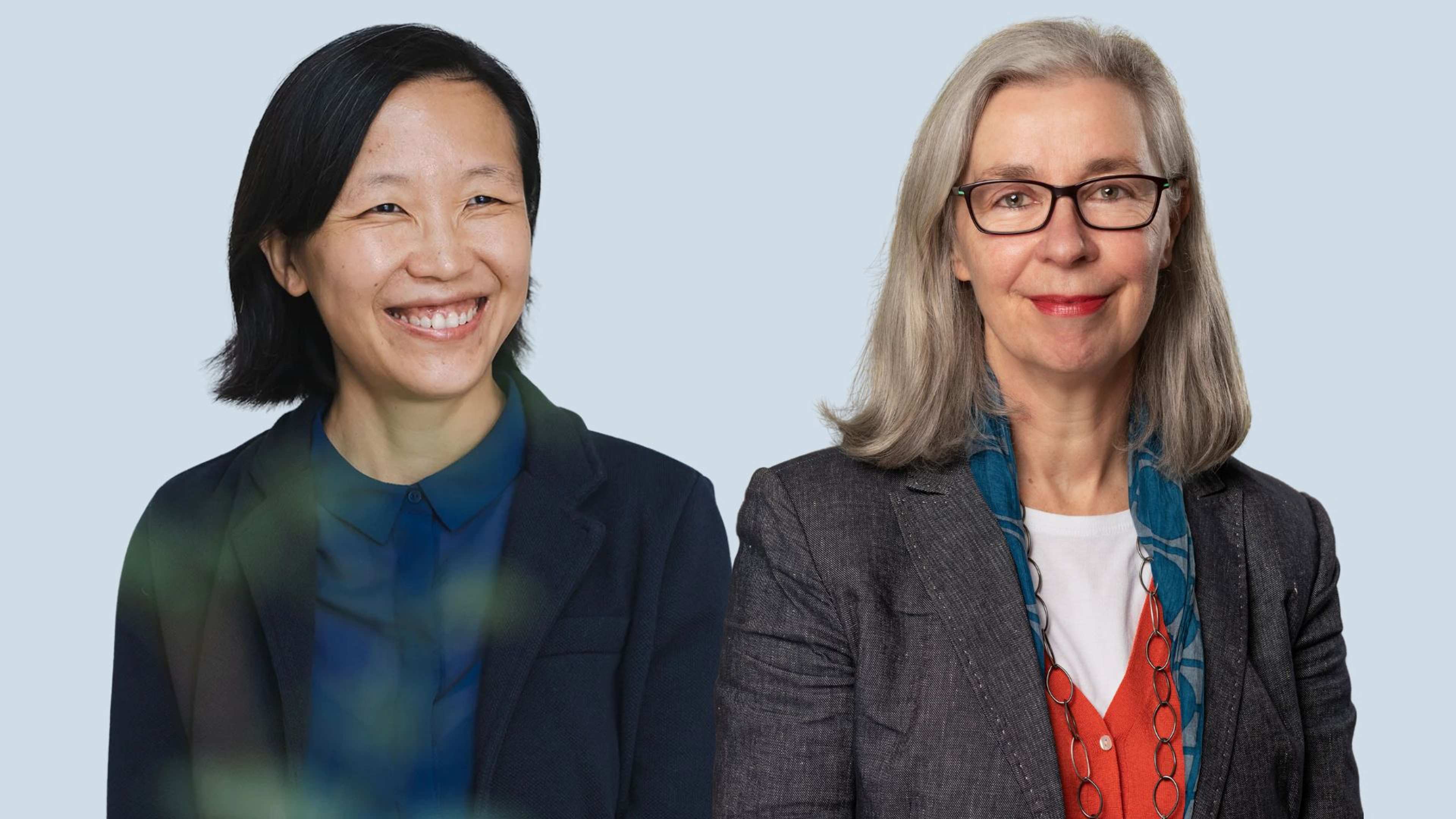
From left to right: Dr Carol Yinghua Lu and Professor Claire Roberts
Carol Yinghua Lu is one of the leading critical thinkers and curators working in the field of contemporary art today. As Director of Beijing’s Inside-Out Art Museum, she leads one of China’s most experimental and research-intensive art institutions.
Carol also has a close connection to the University of Melbourne, where she became the first international PhD candidate specialising in Chinese art history to graduate from the Art History and Curatorship program.
I’ve had the pleasure of knowing and working with Carol for more than a decade, as her PhD supervisor alongside Professor Charles Green and as a colleague.
Her doctoral study was linked to my ARC Future Fellowship project, Reconfiguring the World: China. Art. Agency 1900s to Now, and this coincided with a broader program effort over many years to strengthen Asian art history within the University’s curriculum and research.
That commitment has transformed the program. Today, five continuing staff members have expertise across Chinese, Japanese and Southeast Asian art histories. Carol’s decision to undertake her PhD at Melbourne, and her continued international career since graduating, reflect the strength of a growing community of Asian art alumni working around the world.
Carol has now returned to Melbourne as co-curator, with Liu Ding, of Poetry goes no further than language at Buxton Contemporary. I recently sat down with her to discuss the exhibition, her curatorial practice and return to the University of Melbourne.
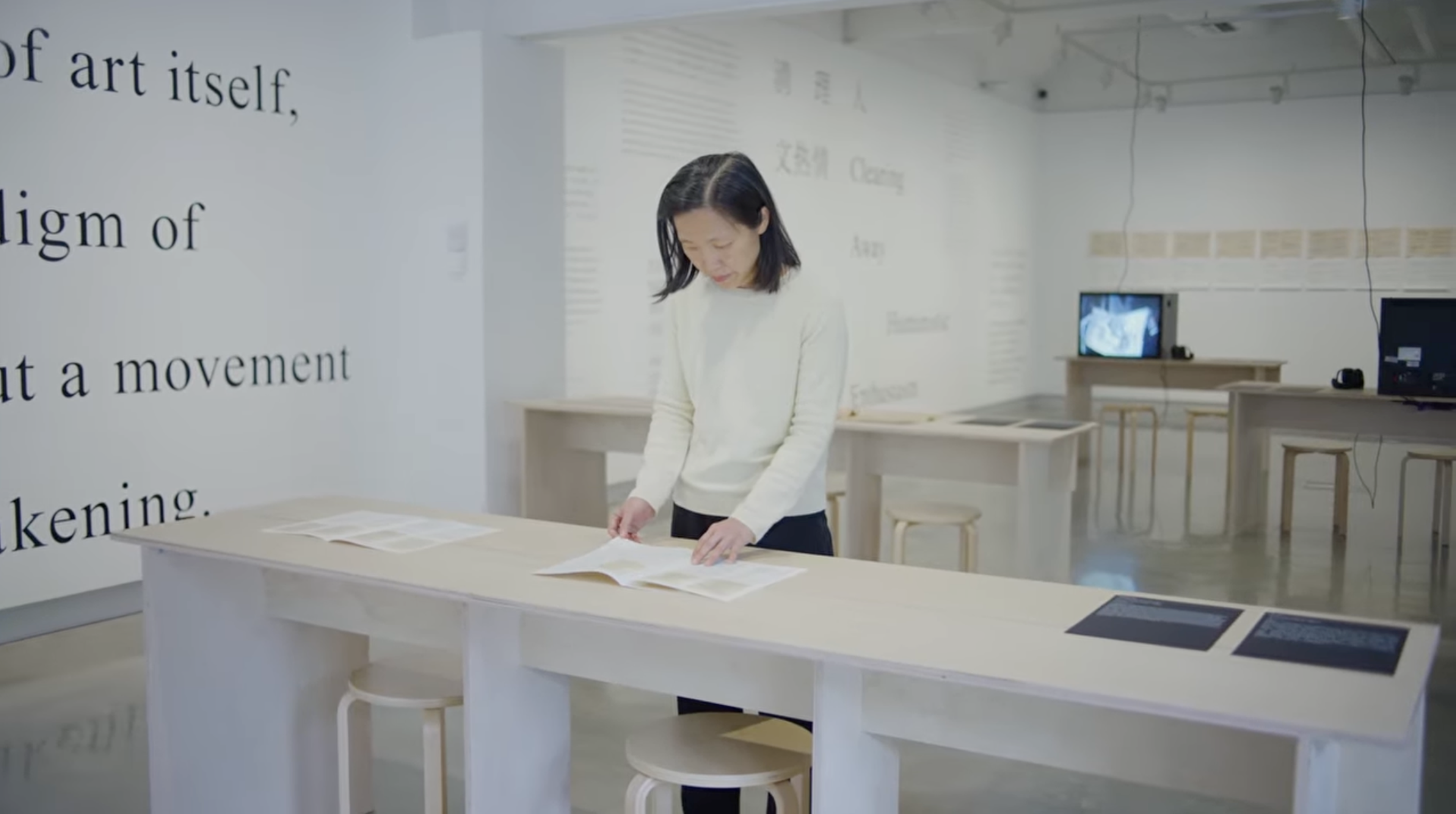
Video still of Dr Carol Yinghua Lu by James Wright.
Carol, it is wonderful to have you back on campus again, this time as curator of Poetry goes no further than language: A historical moment of art becoming art again at Buxton Contemporary. Let’s start with how and why you settled on bringing this show to Melbourne.
Thank you, Claire! It means a lot to have the opportunity to curate an exhibition on campus. This exhibition is based on long-term research that Liu Ding and I have been carrying out on the history of contemporary art in China. It reveals a significant discovery we have made, which traces the contemporary turn in Chinese art to the emergence of conceptualism through the practice of Beijing artist collective New Measurement Group (1988–95). We link this beginning to the ‘anti-culture’ and ‘anti-art’ trend of the mid 1980s characterised by a series of nihilistic and radical practices and thoughts. This is a story that has not been told before. We are very fortunate to be able to present it in a university art museum like Buxton Contemporary, which foregrounds experimental practices and rigorous research in art historical discourses.
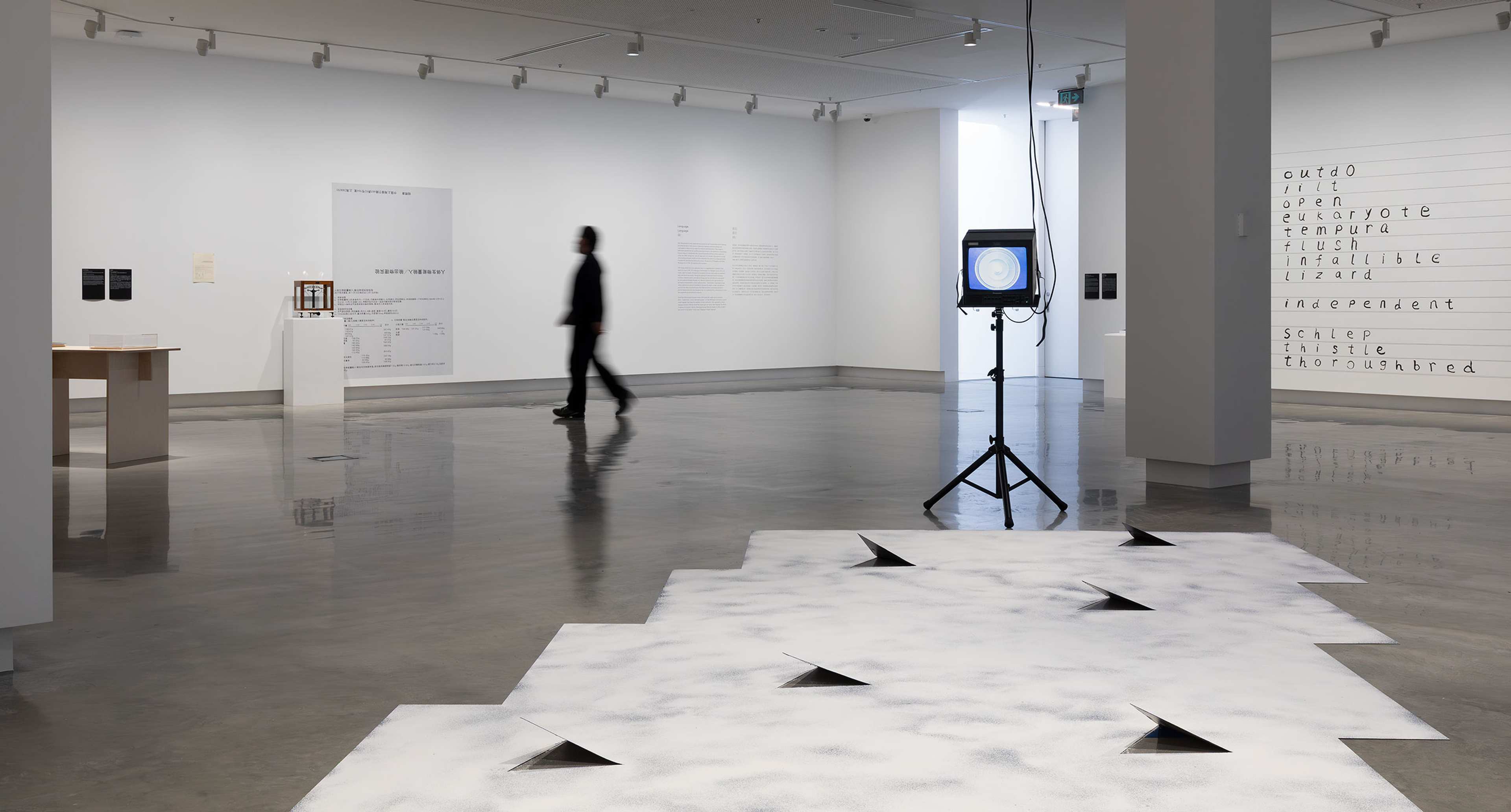
Installation view of Poetry goes no further than language: A historical moment of art becoming art again, Buxton Contemporary, the University of Melbourne. Photography by Christian Capurro.
The title of the exhibition is inspired by a statement made by the poet Han Dong in 1985:Shi dao yuyan wei zhi诗到语言为止. This seems to be an attempt to emphasise the primacy of words or language over ideas or ideology. Can you describe the atmosphere in which that statement was made and the relationship between visual artists and poets, and art and language at that time?
The intellectual liberation from the late 1970s was sparked by the official call to ‘emancipate the mind’ by the end of the Cultural Revolution (1966–76). By the mid-1980s, a new chorus of voices was deliberating the changing values and meanings of art. A marker of this paradigm shift was poet Han Dong’s statement 'Poetry goes no further than language' in 1985. This sentiment was shared by visual artists eager to challenge artmaking as purely an aesthetic experience or demonstration of technical ability, while distancing themselves from the humanistic overtones of early-1980s practice. In the mid 1980s, intellectual trends of postmodernism prevailed. Meanwhile, the art world was seeking to eliminate expressions of meaning, taste, and form and the hierarchy of artistic expressions from artworks. Together, they stimulated a series of nihilistic and radical works. Some critics described such an artistic trend as ‘anti-culture’ and ‘anti-art’.
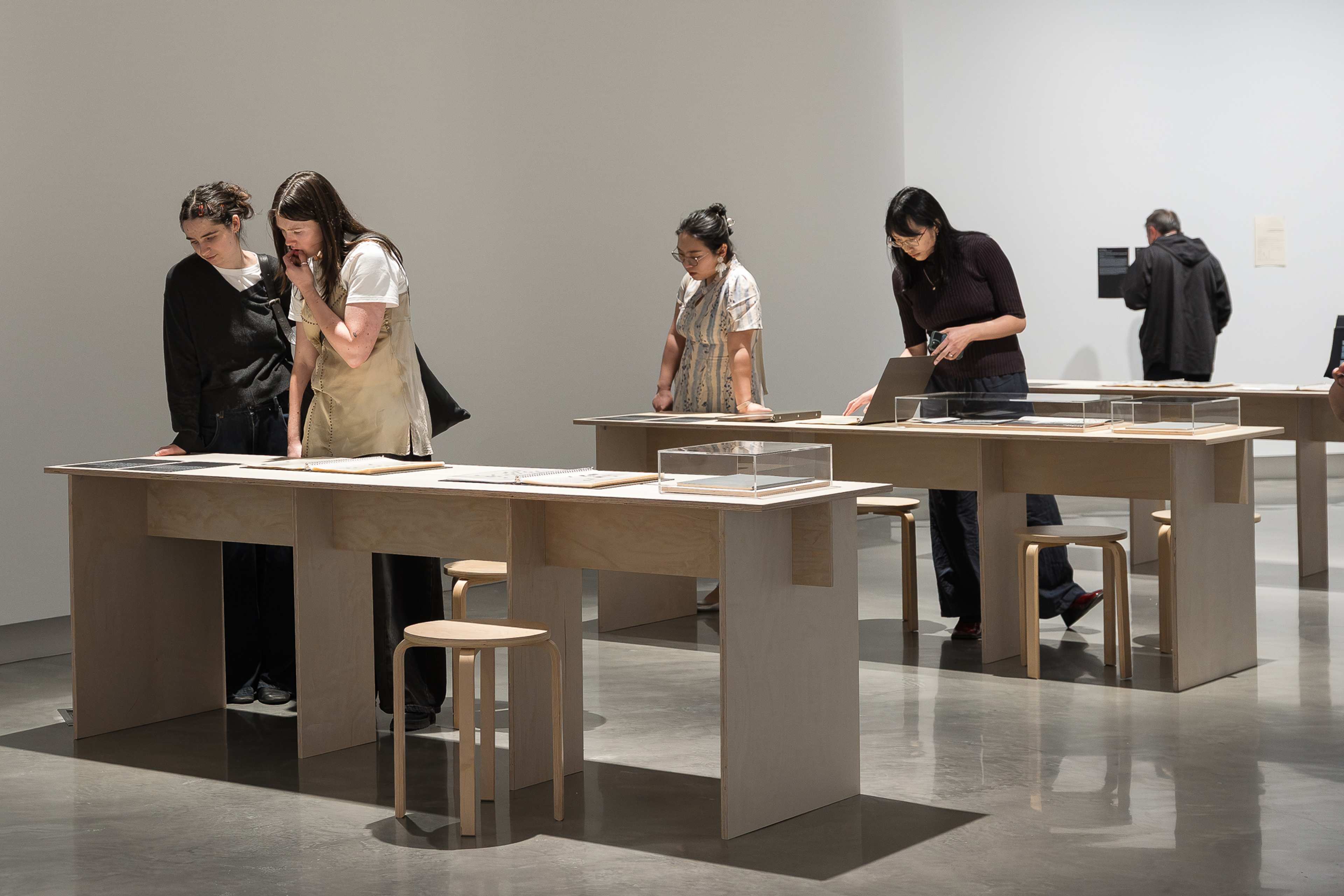
Visitors engaging with works by New Measurement Group. Image credit: Astrid Mulder.
The exhibition demands that the viewer slow down, read, engage with the work, and think. It also likely challenges many people’s preconceived ideas of contemporary Chinese art. To what extent are these motivating ideas in your curatorial practice?
We are immensely interested in the relationship between contemporary art and its underlying intellectual impetus, always connecting the study of contemporary art to scholarly findings and approaches in such disciplines of the humanities as histories of literature and thought, political science and philosophy. One of the symptoms of artistic and curatorial practice since the onset of the 21st century, following the sped-up globalisation of post-1989, is how they gradually become over-flattened and conventionalised. This is why we emphasise the importance of understanding the conceptual incentive behind artworks and events, as much as appreciating their visual value.
Noting the discrepancy between preconceived ideas of contemporary Chinese art and its historical and contemporary realities, we have analysed how the same ideological structure which produced the official doctrine of Socialist Realism during the Cold War continuously affects the practice and canonisation of art until today. In a way, Socialist Realism, as a facet of the political legacy produced within extreme ideological competitions during the Cold War period is a ghost haunting us until today. While artistic styles appear drastically different today, they operate on a conceptual foundation shaped by the particular social, political and conceptual framework of the 20th century. By extension, this study potentially situates artistic developments in the Global East more in parallel and continuity with those in the assumed centre of the West, instead of being a diversion or a rupture. This cohesive view of art in the 20th century has the potential to contribute to understanding the continuous historical process of the 20th century, from the perspective of the history of thought. Developing a more nuanced and sophisticated conception of art not merely from a stylistic lens but also by studying its conceptual drives and ideological foundations could cultivate a more truthful perception of global art since the end of the Cold War.
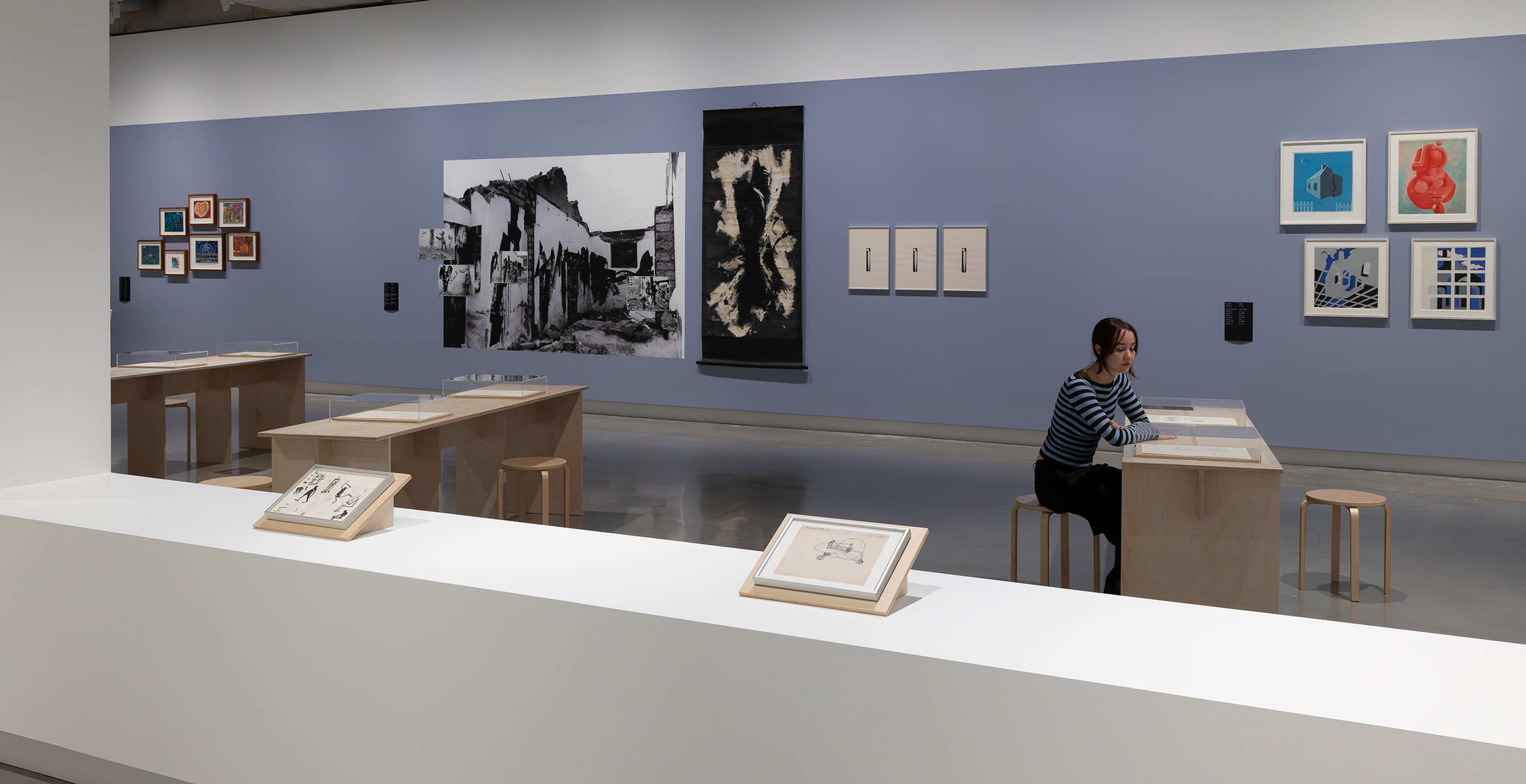
Installation view of Poetry goes no further than language: A historical moment of art becoming art again, Buxton Contemporary, the University of Melbourne. Photography by Christian Capurro.
A striking aspect of the exhibition is what you term ‘a complex convergence’ of artistic practices, involving individual experimentation on the one hand and collective problem solving on the other. Can you talk about phenomenon of the ‘split individual’ in the 1980s and the extent to which it continues to operate today.
‘Split individual’ is another discovery we have made through developing this exhibition at Buxton. We have presented the practices of New Measurement Group and Qian Weikang a few times previously, but this is the first time we brought the individual works of members of New Measurement Group in dialogue with their collective practice, which took place in parallel. Drawing on surrealism, abstraction, folk art, and mythology, their individual works echo the dominant artistic trends of early to mid-1980s China and reveal a reality of prevalent artistic languages of the time. Together, these works illustrate the stark contrast between the artists' independent concerns and the framework of measurement and standardisation they developed collectively. Where their collaborative output sought to erase individual expression through rules, these works reveal distinct styles and sensibilities, highlighting the creative tension between personal vision and collective discipline that defined the group's broader project. Exemplifying the notion of the ‘split individual’ this tension proposes an art historical narrative that rejects linear progression and rupture between key artistic transitions. Here, a more complex picture of this critical juncture emerges—one characterised by entanglements, concurrences, and sometimes clashes between competing ideas within a single individual, and between shifts in personal understanding and collective social change.
To an extent, Chinese society in transition also manifested the tendency of the ‘Split Individual’ in the 1980s. Take the example of the Special Economic Zones, in 1980, the government designated a selection of coastal cities as special zones to carry out more radical economic experiments in parallel to mainstream social developments.
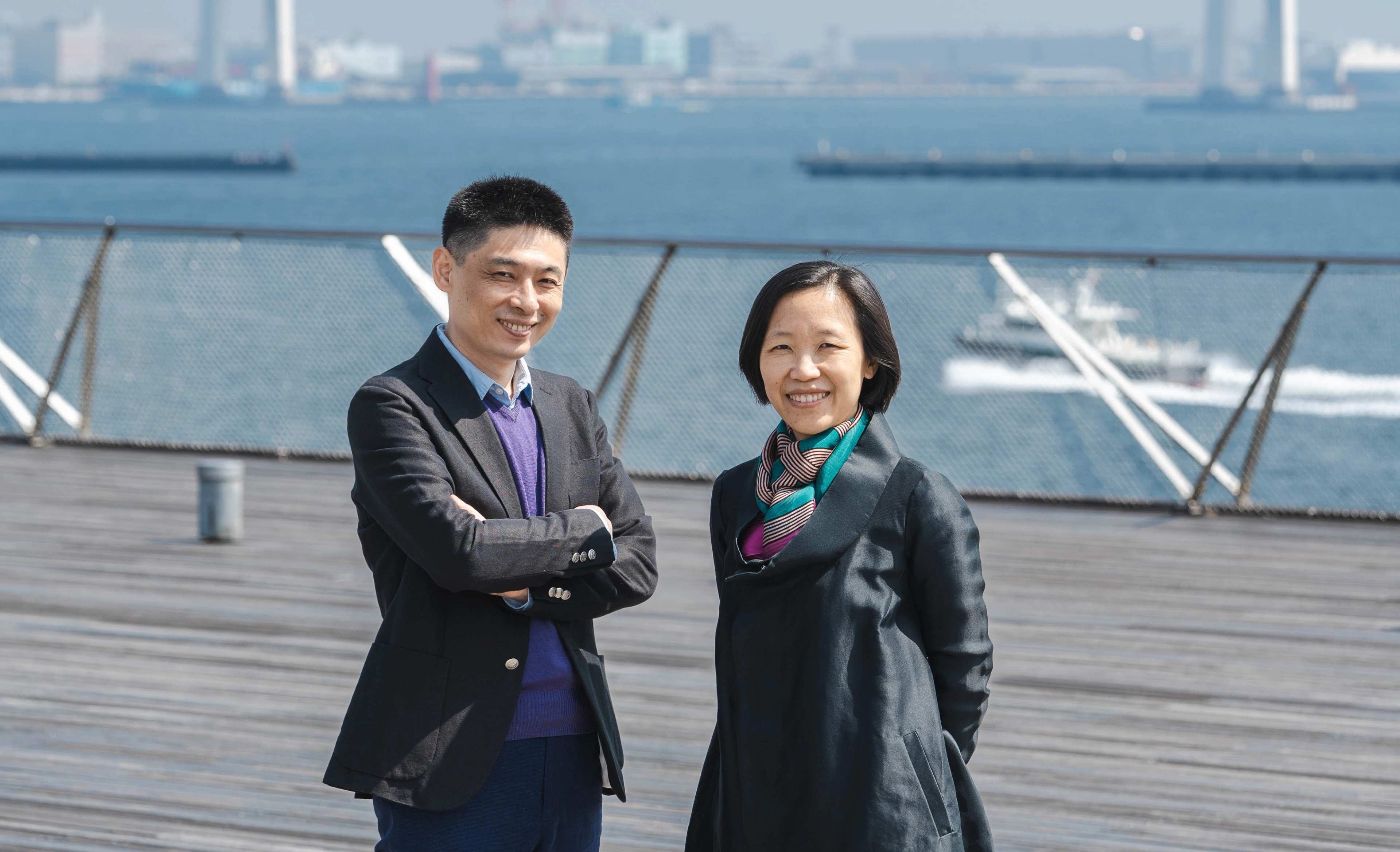
From left to right: curators Liu Ding and Dr Carol Yinghua Lu. Image credit: OHNO Ryusuke.
This exhibition, like many of your art historical and curatorial projects, has been generated in conjunction with Liu Ding, an artist, who is also your partner. How and why did you decide to work together? What are the benefits of working collectively?
Liu Ding was the one who brought me into the art field and continues to teach me about art. He’s not just a partner and a friend but a mentor as well. We have worked together for slightly over two decades now. It has been a long process involving countless trips, conversations, and collaborations. We are both quite independent, confident, candid, and generous in our spirits, which helps make our collaboration enriching for both of us. We can listen to and learn from each other. We are also quite different in our strengths. Liu Ding is visionary, daring, imaginative, and thoughtful. I am impulsive, practical, sociable, and flexible. In this sense, we assist and support each other.
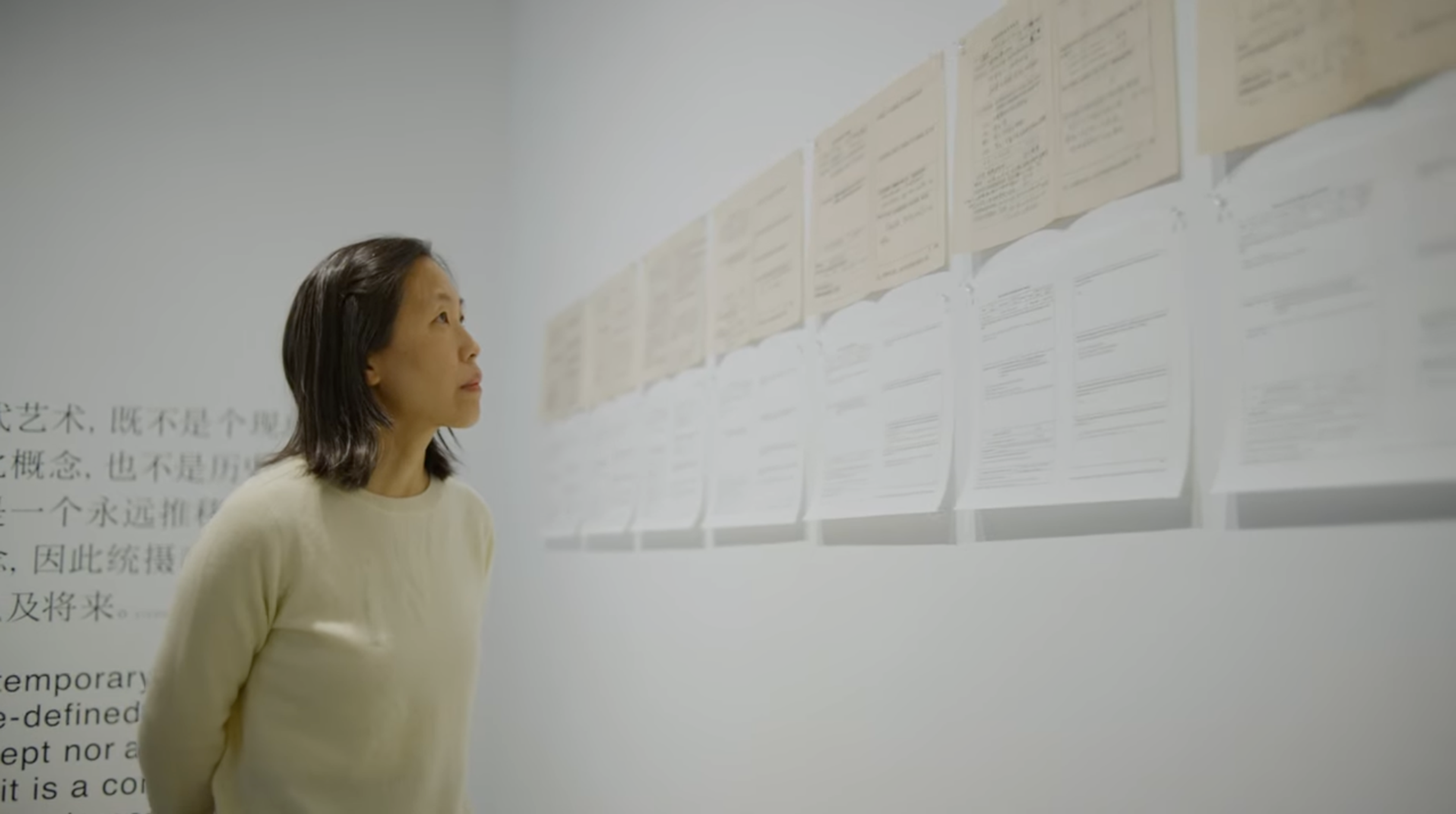
Video still of Dr Carol Yinghua Lu by James Wright.
You accepted the Directorship of Beijing’s Inside-Out Art Museum (IOAM) while you were completing your PhD at the University of Melbourne. Can you please tell us about the position of IOAM within the art eco-system in China and examples of how you seek to contribute to or shape the discourse on art.
Directorship of Beijing Inside-Out Art Museum was not really a job title. It’s an integral part of my practice. Founded in 2008 by a small group of visionary Chinese entrepreneurs, the Inside-Out Art Museum is a publicly registered charity, supported by the Inside-Out Art Foundation, set up by the same founders. This structure enables art professionals like me to be fully autonomous in programming, and to commit our vision to keeping pace with changes in art. Such a commitment to art and flexibility in practice is rare, considering the recent tendency of museum development in China, as part of cultural tourism or creative industry. We don’t operate by the logic of any industry but value the possibility of contributing to the long-termed cultural construction in society.
We continuously focus on growing ourselves as a leading research institution, not only in rewriting Chinese art history, but also in inventing possible models of instituting in China. With our research, exhibition, discursive and publishing program, we have gradually built a discipline of contemporary art that hardly exists in art academies or public museums in China. In this sense, we see ourselves playing a key role in learning in contemporary art both within and outside of the specialised art circle.
For instance, since 2018, we have initiated a lecture and publication series titled China as an Issue. This discursive program covers topics related to both the historical formation and contemporary development of China, stressing the connections between forms and thoughts. By calling into question the underlying typology of the inside and the outside, we consider China as an issue requiring discussion, rather than already having an established premise. By inviting fellow thinkers from a wide range of disciplines to discuss these topics, we are able to negotiate and push the parameters of art and stimulate a discourse that intersects art with other discursive fields. With them, we have woven a growing web of scholarship to understand China both historically and in its present tense.
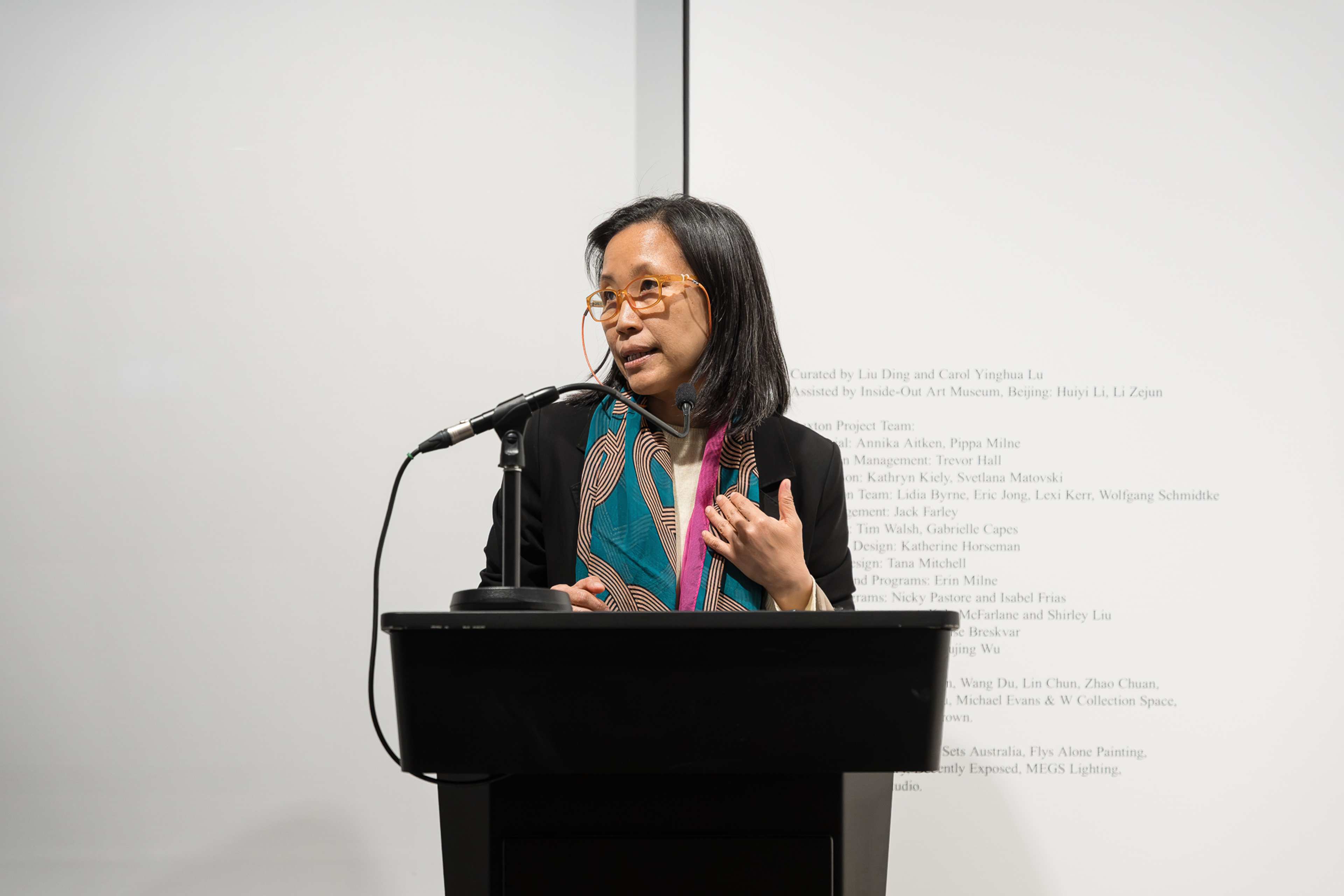
Carol Yinghua Lu speaking at the opening of Poetry goes no further than language. Image credit: Astrid Mulder.
To what extent has the experience of researching and writing a PhD dissertation informed your ongoing practice? What is the use of a PhD in Art History?
I have become a strong believer in the training of art history ever since undertaking my PhD. Both the process and the methods gained from the process, have enabled me to go deeper into my practice. In contemporary art since the 1990s, while there have been many attempts to expand the scope of art by working around timely social issues in curatorial formulations, the absence of historical perspectives limits many such curatorial visions to a short timeframe and a flat surface. Instead of just fixating on and responding to immediate phenomena and conditions, insights obtained from longer human histories could help ease some of the restrictive frameworks, often of short-termed inventions. Our research of Socialist Realism, for instance, has trained us to look for the conceptual drives for artistic practice from a longer historical framework.
You and Liu Ding have recently been named the curators of the 19th Istanbul Biennale to be held 18 September to 14 November 2027. What does it mean to you to work internationally? What is your aim?
We embrace this new challenge with great excitement and are very much looking forward to growing ourselves through this experience. Working internationally allows us to critically reflect on our own positions and expand our understanding of art, which is a must if one wishes to remain continuously relevant and engaged with the field of contemporary art.